Deciding between Montecito’s Upper and Lower Village often comes down to how you want to live day to day. You might be picturing coffee on foot, sand before lunch, or quiet afternoons by the pool with mountain views. In this guide, you will see how the two areas differ in homes, lifestyle, and value drivers so you can focus your search with confidence. Let’s dive in.
How we define Upper vs Lower Village
Montecito locals use “Upper Village” and “Lower Village” as informal place names. They describe two small commercial and residential hubs within the community rather than strict boundaries. For this guide, think of the Lower Village as the coastal-side village center closest to the beach and the Upper Village as the inland foothill center at a higher elevation.
These are working definitions to help compare lifestyle and housing patterns. Exact boundaries can vary by source. If you are evaluating a specific home, review parcel maps and drive the immediate area to confirm how it lives relative to each village core.
Homes you will find
Lower Village homes
In the Lower Village, you will notice a village scale and a mix of housing near shops and services. Expect smaller cottages and bungalows, villas, and some multi-unit buildings with garden settings. Many properties feel connected to daily errands and dining, which attracts buyers who value a town-and-beach lifestyle. Architectural styles vary, with Spanish and Mediterranean influences, Craftsman elements, and thoughtful renovations common.
Upper Village homes
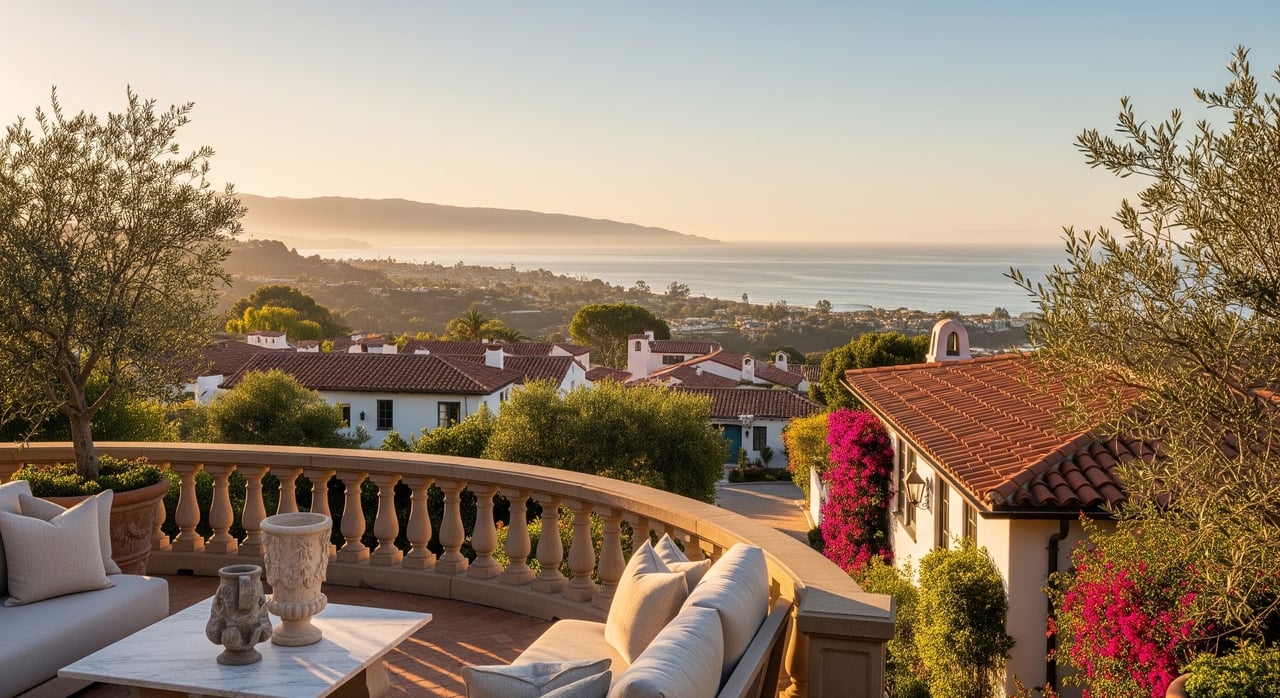
In the Upper Village, you will see larger single-family homes and estate properties set on bigger lots. Privacy, gates, long driveways, guesthouses, and pools are more prevalent. Elevation can add mountain or ocean-shed views, and the setting tends to feel quieter and more residential. The architecture spans historic early 20th-century estates, mid-century homes, and newer custom builds, often with Spanish Revival or Mediterranean character.
Lifestyle and daily rhythm
Walkability and errands
If you want to walk to cafés, boutiques, and services most days, the Lower Village is typically the more pedestrian-friendly hub. Sidewalks and a concentrated commercial corridor make short errands simple. The Upper Village also offers shops and services, but the retail is less dense, so you will rely more on short drives for dining and errands.
Beach and trail access
Proximity to the shore is a clear differentiator. Lower Village homes often sit closer to public beach access points and waterfront recreation. Upper Village homes balance that with quick access to foothill trailheads and a more elevated setting. Your ideal fit depends on whether you prioritize sand or trail as your daily anchor.
Schools and family amenities
Both villages sit within a broader network of public and private school options that are important to many buyers. Because school attendance zones can change, confirm assignments for a specific property directly with district maps. Parks, playgrounds, and community facilities are scattered across Montecito and nearby Santa Barbara, so plan a quick area tour to see what is near your short list of homes.
Transportation and commute
Montecito offers convenient access to the 101, downtown Santa Barbara, and regional services. Lower Village addresses often have more direct routes to the beach and coastal corridor. Upper Village addresses typically involve short drives across residential streets to reach shops, the highway, or the waterfront. If commute timing matters, test the drive at the same hour you expect to travel.
Market patterns and pricing drivers
Every Montecito micro-market is nuanced, but a few drivers tend to shape value across both villages:
- Lot size and privacy. Larger parcels and gated or set-back homes usually trade at a premium.
- Ocean proximity and views. Near-shore properties and clear coastal view corridors command higher prices.
- Architectural pedigree and history. Well-known estates and architect-designed homes attract trophy buyers.
- Walkability. Smaller, well-located homes near village amenities see strong demand.
- Condition and outdoor living. High-end finishes, recent renovations, pools, and indoor-outdoor flow matter.
Comparing the two villages, Upper Village estates often achieve higher absolute prices when they combine acreage, privacy, and views. Lower Village homes can reach high price per square foot given their walkability and access to shops and the beach. Inventory patterns can differ as well, with smaller village homes turning over more often and larger estates sometimes seeing longer marketing timelines. For decisions on a specific property, rely on current MLS closings, days on market, and price per square foot for the most accurate read.
Which village fits your goals
- Beach-oriented buyer. If you want a low-maintenance home near cafés and the coast, the Lower Village usually aligns with your routine.
- Family move-up buyer. If you want a yard, a quieter street, and room to grow, the Upper Village tends to offer larger lots and more privacy.
- Privacy and estate buyer. If you value acreage, gates, and views, you will likely focus on Upper Village pockets in the foothills.
- Investor or second-home buyer. If short, easy visits and a simple lock-and-leave setup matter, Lower Village homes near amenities are often appealing. Always confirm local rental rules before planning any leasing strategy.
How to evaluate homes in person
- Map your day. Start at each village core. Walk to your preferred café, then drive to the beach or a trailhead, and note how it feels.
- Time errands. Visit your top homes midday and early evening to gauge traffic, parking, and pedestrian flow.
- Assess privacy and exposures. Note setbacks, hedges, gates, sightlines, and sun patterns across outdoor spaces.
- Check outdoor living. Look for patios, pools, guest spaces, and how indoor rooms connect to the yard.
- Verify practicals. Ask your agent for recent neighborhood comps, lot-size data, and any improvement history that affects value.
- Review risks and rules. Montecito has areas affected by fire, flood, and debris flow. Consult official hazard maps for any property you consider, and confirm permitting and short-term rental regulations prior to purchase.
Discreet guidance for a confident move
Choosing between Upper and Lower Village is more than a map decision. It is about finding the home that supports your best days, whether that is a morning surf and lunch in town or a private afternoon by the pool with mountain views. With local expertise and a fiduciary-first approach, you can evaluate each option with clarity and discretion.
If you want a quiet, concierge process and access to both on-market and private opportunities, reach out to Jon Perkins for a confidential consultation.
FAQs
What is the main lifestyle difference between Upper and Lower Village?
- Lower Village tends to offer walkable, beach-adjacent living near shops, while Upper Village offers larger lots, more privacy, and a quieter foothill setting.
How close are the villages to beaches and hiking?
- Lower Village homes are generally closer to public beach access, and Upper Village homes often provide quicker access to foothill trailheads, so it depends on your priority.
What home types and lot sizes are common in each village?
- Lower Village often features smaller cottages, villas, and some multi-unit buildings, while Upper Village leans toward larger single-family homes and estates on bigger parcels.
How do prices compare between Upper and Lower Village?
- Upper Village estates can reach higher total prices when paired with acreage and views, while Lower Village homes may show higher price per square foot due to walkability and coastal proximity.
What should families know about schools near Montecito’s villages?
- School options include public and private choices across Montecito and nearby areas, and you should confirm the specific attendance zone for any property with current district maps.
Are there hazards or regulations to check before buying?
- Yes, review official hazard maps for fire, flood, and debris flow, and confirm permitting, remodeling rules, and any short-term rental restrictions for the address you are considering.
How can I find off-market opportunities in Montecito?
- Work with a local team that maintains private networks and discreet access to nonpublic listings, and ask for a tailored search aligned with your criteria.