Curious why so many of Montecito’s most memorable homes feel timeless, even when they come from different eras? That is not an accident. Montecito luxury living is shaped by a few defining architectural styles, but just as important, it is shaped by the land itself. If you are buying, selling, or simply trying to understand what gives this market its character, this guide will help you read the architectural language of Montecito more clearly. Let’s dive in.
Montecito Design Starts With the Site
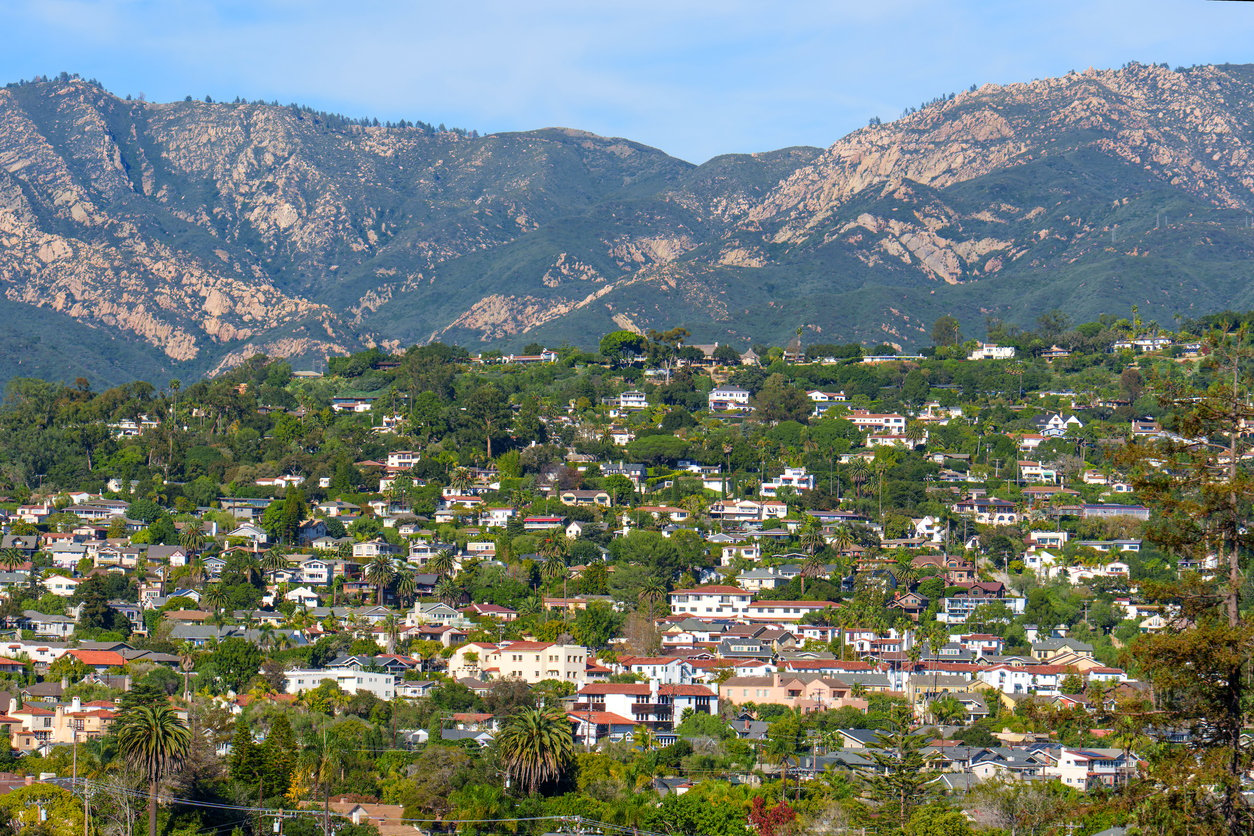
Montecito is best understood as a layered estate landscape, not a one-style community. Historic documentation points to an early 1900 to 1920 estate era, a strong 1920 to 1940 shift toward Spanish Colonial Revival, and a later postwar opening to modernism. That mix helps explain why Montecito feels cohesive without feeling uniform.
Local architectural guidelines reinforce that character. In Montecito, parcel size, topography, views, grading, landscaping, and the retention of significant trees all shape how a property looks and lives. The result is a built environment that feels landscape-first and deeply tied to its setting.
For you as a buyer or owner, that matters in practical ways. Major exterior changes are not only design choices. They are also part of a broader local framework that considers neighborhood compatibility, public view sheds, and Montecito’s semi-rural feel.
Spanish Colonial Revival Defines Montecito
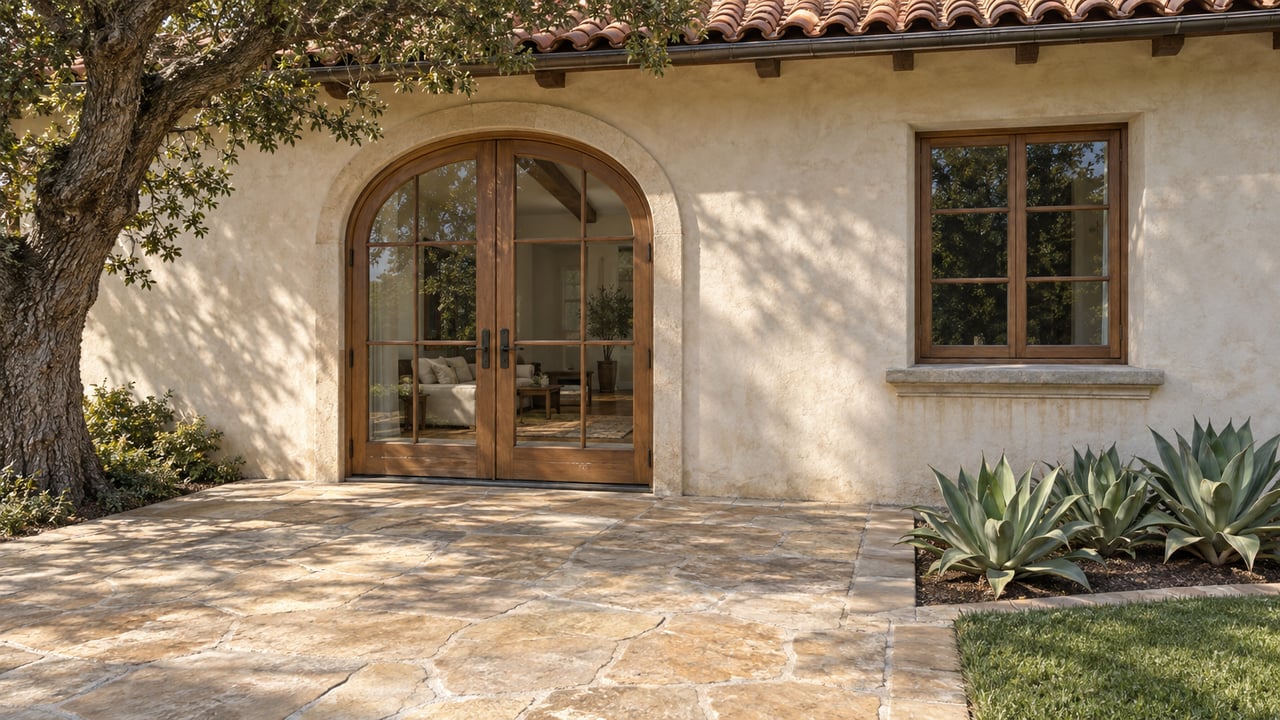
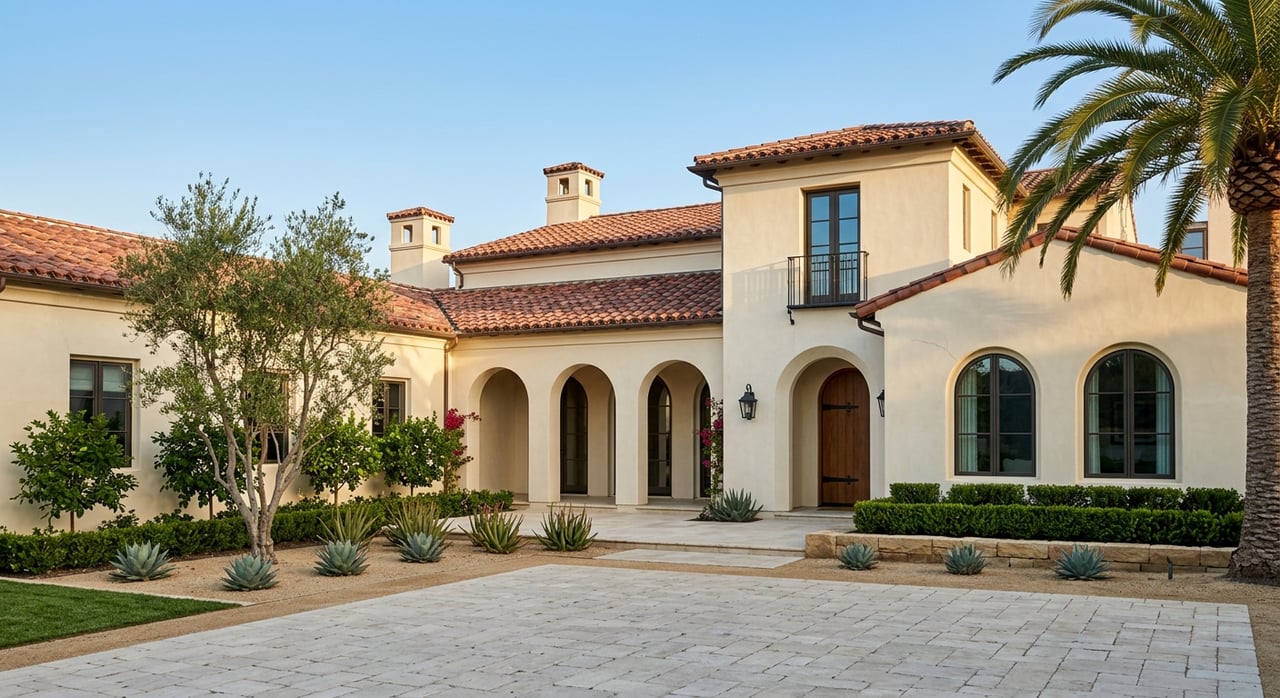
If there is one style that most clearly captures Montecito’s historic luxury identity, it is Spanish Colonial Revival. In the Santa Barbara-Montecito design tradition, these homes are often low-pitched and asymmetrical, with stucco walls, red terra-cotta roofs, recessed wood doors and windows, arched surrounds, and wood or iron detailing. Patios and courtyards are central, not secondary.
What makes this style so enduring is the way it supports daily living. These homes often create a sheltered and inward-looking experience, with rooms opening to courtyards, garden spaces, and terraces. That indoor-outdoor rhythm remains one of the clearest hallmarks of Montecito luxury.
Casa del Herrero is one of the most important local reference points. Its 1920s and 1930s legacy, along with its reputation as a leading example of Spanish Colonial Revival architecture, helps illustrate why this style still carries so much weight in Montecito today. For many buyers, it signals authenticity, pedigree, and a direct connection to the area’s design heritage.
Key Spanish Colonial Features
- Stucco exterior walls
- Red terra-cotta tile roofs
- Recessed wood doors and windows
- Arched openings and surrounds
- Wood or iron balconies and grilles
- Courtyards, patios, and enclosed garden rooms
- A more rustic, inward-looking feel
Mediterranean Revival Brings Formal Grandeur
Mediterranean Revival shares some visual DNA with Spanish Colonial homes, but it often reads as more formal and symmetrical. Typical features include hipped clay-tile roofs, arcades or loggias, terraces, and plaster or cast-stone ornament. These homes also tend to present more outward-facing formal gardens.
In simple terms, Spanish Colonial Revival often feels intimate and sheltered, while Mediterranean Revival can feel more composed and palatial. That distinction matters when you walk a property. One may invite you inward through a courtyard sequence, while the other may emphasize broad terraces and a more formal relationship to the grounds.
Montecito’s historic estates help tell that story. Val Verde and the nearby Gillespie estate, El Fureidis, reflect an earlier estate tradition with a strong relationship between architecture and gardens. Historic records describe El Fureidis as the first Montecito estate to use Italian and Persian garden design, showing how the area’s luxury homes have long blended architecture with carefully shaped outdoor spaces.
Why Buyers Still Love This Style
Mediterranean and Spanish Revival homes continue to attract attention because they align so naturally with Montecito living. They offer privacy, garden-centered entertaining, and a calm transition between interior rooms and outdoor spaces. That combination feels especially compelling in a setting where climate, views, and landscape are such a large part of the lifestyle.
They also come with visible stewardship needs. Stucco, clay-tile roofs, ironwork, fountains, and mature landscaping all require ongoing care. Preservation work at landmark properties such as Casa del Herrero, including roof restoration and tile and fountain repairs, shows how important long-term maintenance can be in these homes.
Contemporary Estates Offer a Modern Counterpoint
Montecito is not defined only by historic revival architecture. Contemporary estates have become an important part of the luxury landscape, especially for buyers who prioritize clean lines, open plans, privacy, and stronger visual connections to views.
These homes often feature long sight lines, expansive glazing, and more flexible interiors. In place of ornament, the focus shifts to light, scale, and the relationship between the structure and the landscape. In Montecito, that often means creating broad openings to ocean, mountain, or garden views while still preserving privacy.
Examples in areas like Ennisbrook and the Golden Quadrangle help illustrate this side of the market. Contemporary homes there show how Montecito modernism can stand apart from the area’s Spanish Colonial norm while still responding to the same essential priorities of setting, seclusion, and view orientation.
What Contemporary Living Feels Like
For many buyers, the appeal is straightforward. Contemporary estates can deliver brighter interiors, easier flow for entertaining, and a more immediate connection to outdoor spaces. They often feel tailored to modern living patterns without losing the calm, private atmosphere that Montecito buyers expect.
There is also a practical side to owning them. Maintenance may focus less on decorative surfaces and more on the building envelope, systems, and landscape performance. Even so, the same local emphasis on site planning, views, and neighborhood compatibility still applies.
Historic Compounds Carry Lasting Prestige
Some of Montecito’s most significant properties are not just single homes. They are complete compounds, where house, gardens, outbuildings, and site planning work together as one estate setting. That distinction is a major part of Montecito’s luxury identity.
Historic documentation shows how Montecito’s 1920s garden tradition moved away from grand Beaux-Arts vistas toward smaller walled gardens with fountains. That shift helped create the more intimate estate environments that still define many landmark properties today. In these settings, architecture and landscape are inseparable.
This is one reason historic compounds attract such strong interest from design-minded buyers. Their value is not just age. It is the rarity of a fully realized environment that preserves the original relationship between structure, gardens, and land.
Stewardship Is Part of Ownership
In Montecito, owning a landmark-style property often means thinking like a steward. Long-term care may involve roofs, fountains, tilework, mature trees, and historic landscape elements. That stewardship mindset is part of what gives these homes their enduring presence.
For sellers, this can also shape presentation and positioning. A home with architectural integrity and a well-maintained setting often tells a more compelling story when brought to market. In an estate-driven market like Montecito, that narrative can matter just as much as square footage or finish level.
The Common Thread Across Styles
Although Montecito includes distinct architectural expressions, the strongest luxury properties tend to share a family resemblance. Across Spanish Colonial Revival, Mediterranean Revival, contemporary estates, and historic compounds, the recurring themes are consistent.
You will see a strong relationship between house and land. You will see indoor-outdoor flow, privacy, and careful siting. And you will often see landscaping treated as a defining design element rather than an afterthought.
That is why Montecito architecture feels so specific to place. The style matters, but the deeper value often comes from how well a property responds to its site. In this market, luxury is rarely just about the house alone.
What This Means for Buyers and Sellers
If you are buying in Montecito, understanding architectural style can help you evaluate more than aesthetics. It can shape how a home lives, what maintenance may look like, and how the property fits into Montecito’s broader design character. A courtyard-centered revival estate and a glass-forward contemporary residence may both be exceptional, but they deliver very different daily experiences.
If you are selling, architectural clarity can be a real advantage. Buyers in this market often respond strongly to properties with a distinct point of view, especially when that point of view is supported by the home’s setting, landscaping, and presentation. The most effective marketing tends to show not only what the home looks like, but why its design belongs in Montecito.
For a market this nuanced, local interpretation matters. Understanding whether a property reads as classic Montecito, formal Mediterranean, modern hillside retreat, or legacy compound can help shape pricing, positioning, and buyer outreach with more precision.
If you are considering a purchase or planning a sale in Montecito, Think Locale offers discreet, high-touch guidance grounded in local architectural context, market knowledge, and estate-level representation.
FAQs
What architectural style is most associated with Montecito luxury homes?
- Spanish Colonial Revival is often seen as the clearest shorthand for Montecito’s historic luxury identity, with Mediterranean Revival also playing a major role.
How are Spanish Colonial Revival and Mediterranean Revival different in Montecito?
- Spanish Colonial Revival usually feels more rustic and inward-looking, with courtyards and asymmetrical forms, while Mediterranean Revival is often more formal, symmetrical, and outward-facing.
Are contemporary homes common in Montecito?
- Yes. Contemporary estates are an important part of the market, especially for buyers who want clean lines, open layouts, privacy, and strong view connections.
Why does landscape matter so much in Montecito architecture?
- Local guidelines place strong emphasis on topography, views, grading, parcel size, landscaping, and significant trees, so the land and the architecture are closely connected.
What should Montecito buyers consider beyond style alone?
- You should also consider siting, privacy, indoor-outdoor flow, upkeep needs, and how the home’s design works with Montecito’s landscape-first character.
Why do historic compounds stand out in Montecito?
- Historic compounds preserve a fuller estate setting, including the house, gardens, outbuildings, and original site planning, which is increasingly rare to recreate.